National Chamber Orchestra Earns Standing Ovations for The Four Seasons at Washington’s Historic Holy Trinity
Julien Benichou and violinist Joshua Brown lead an evening of Vivaldi and Tchaikovsky in the Georgetown church where
Press Release Disclaimer: This is a press release distributed through the XPR Media network. It has not been independently verified by our newsroom.
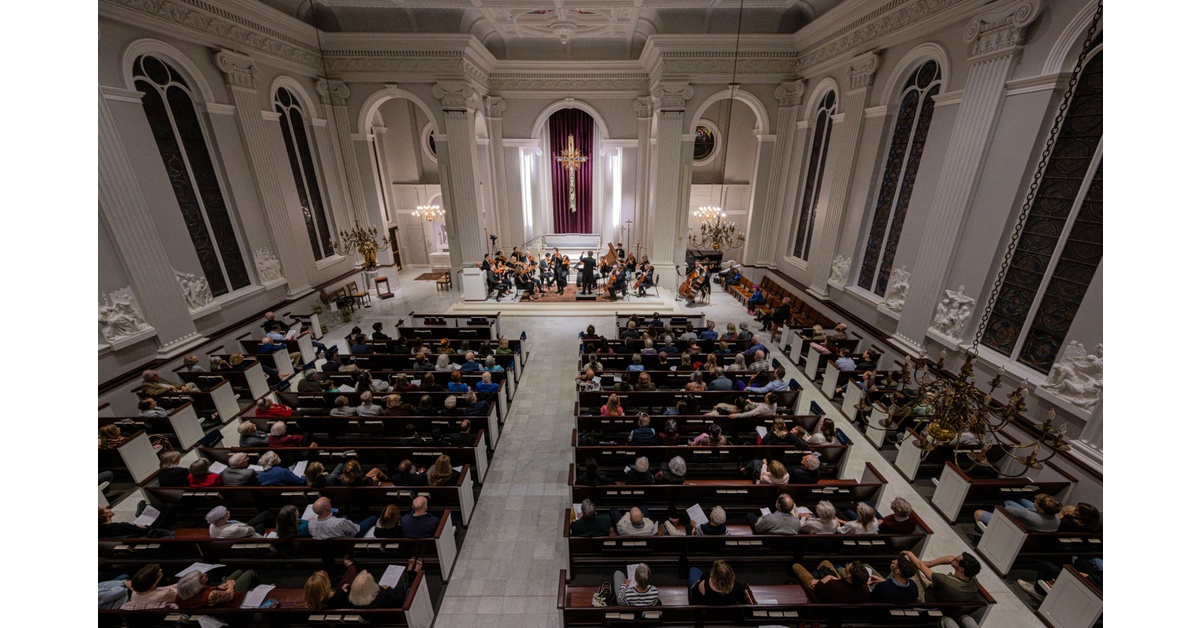

Julien Benichou and violinist Joshua Brown lead an evening of Vivaldi and Tchaikovsky in the Georgetown church where President John F Kennedy worshipped
WASHINGTON , DC, UNITED STATES, October 9, 2026 /EINPresswire.com/ — The National Chamber Orchestra brought Vivaldi’s The Four Seasons and Tchaikovsky’s Serenade for Strings to life on October 3 at Holy Trinity Catholic Church in Georgetown, drawing enthusiastic applause and standing ovations after each major work. Led by General and Artistic Director Julien Benichou and featuring violinist Joshua Brown, the concert joined vivid musical storytelling with the atmosphere of a historic sanctuary.
Beneath the church’s dome, surrounded by beautiful stained-glass windows, the musicians performed with a large cross rising at the center of the performance area. Holy Trinity, where President John F. Kennedy worshipped, offered a setting steeped in Washington history. The sacred surroundings lent the evening a sense of reflection, while the immediacy of the playing brought the audience close to the changing moods of the music.
Benichou’s conducting was mesmerizing. His expressive gestures gave shape to the music’s motion, drawing the ensemble through moments of tenderness, urgency and exuberance. There was a sense of magic in the way soloist and orchestra responded to one another: a phrase would gather energy, a texture would soften, and a new scene would emerge. The audience’s response made clear how strongly the performance resonated.
A Year Unfolds Through Vivaldi
Brown took center stage for Vivaldi’s four concertos, performing on the historic “Lord Newlands” Stradivarius. His interpretation combined technical command with expressive intensity. Facial expressions and body language reinforced the changing character of the music, making the journey through spring, summer, autumn and winter feel personal as well as dramatic.
In “Spring,” the music suggested birdsong, flowing streams and the freshness of a landscape awakening. Brown’s violin lines moved within the orchestra’s bright textures, giving the familiar concerto a sense of discovery. The performance invited listeners into Vivaldi’s vivid musical scenes, from the smallest gestures to the full sweep of the ensemble, while JaLynn Prince’s narration deepened their understanding of the imagery and stories woven into the music.
“Summer” brought a different atmosphere, with languor giving way to gathering tension and the force of a storm. Benichou guided the changing pace and intensity, while Brown brought urgency to the solo writing. The contrast between stillness and turbulence made the music’s weather feel immediate, as the orchestra moved from suspended anticipation into thunderous activity.
“Autumn” carried the energy of harvest, celebration and the hunt. The ensemble’s rhythmic vitality gave the concerto forward motion, and the solo violin brought character to its changing episodes. In “Winter,” sharper musical contours evoked cold and exposure, while the quieter passages offered warmth and repose. Together, the four concertos formed an unfolding narrative of nature and human experience.
The performance showed why The Four Seasons continues to reach audiences across generations. Its images are recognizable, but its emotional range extends beyond description. Joy, fatigue, anticipation and relief all find a place in the music. Brown and Benichou made those contrasts central to the evening, allowing the audience to experience the year as a sequence of changing feelings.
Tchaikovsky and the Power of the Ensemble
Following intermission, the orchestra performed Tchaikovsky’s Serenade for Strings in C Major, Op. 48. The program moved from the four seasonal concertos to a work that places the collective voice of the strings at its center. Its opening movement, waltz, elegy and finale offered a broad emotional arc, with expansive melodies and shifting colors throughout.
Benichou drew warmth and continuity from the ensemble, shaping the serenade’s longer phrases while preserving the distinct character of each movement. The waltz brought grace and buoyancy; the elegy gave the evening a more inward atmosphere. The finale restored momentum, carrying the performance toward an energetic conclusion and another standing ovation.
The orchestra’s musicians were central to that impact. Concertmaster Kelly Cho led the first violins, with Ryan Huo serving as principal second violin. Amanda Kellman led the violas, Igor Zubkovsky the cellos and Victor Holmes the basses. Harpsichordist Caleb Bates contributed to the Vivaldi performance. Their work, together with the full string ensemble, supported the evening’s balance of individual expression and shared musical purpose.
A Historic Violin in a Historic Sanctuary
The concert program identified Brown’s instrument as the “Lord Newlands” Stradivarius, provided through a long-term loan from the Sasakawa Music Foundation in Japan. Named for Lord Newlands, formerly William Hozier, the violin carries a history of collectors and custodians extending through the nineteenth and twentieth centuries. Its appearance in Georgetown connected that history with a new audience through live performance.
Brown’s career has also drawn international recognition. The program notes his 2025 Avery Fisher Career Grant and his Second Prize and both Audience Awards at the 2024 Queen Elisabeth Competition in Brussels. At Holy Trinity, those credentials found their practical expression in a performance that brought precision, character and emotional engagement to one of the most familiar works in the violin repertoire.
Harmony Through Listening
The evening offered a space for shared attention in a world marked by conflict and division. Under the sanctuary’s cross and stained glass, musicians and listeners gathered around an experience that required no common nationality or language. The orchestra’s collaboration made harmony tangible: distinct voices listened and responded, creating something none could achieve alone.
That theme also connects with the orchestra’s recent presentation of a separate, Mozart-linked Stainer violin at its September 27 recital. While the October concert featured the “Lord Newlands” Stradivarius, both events demonstrate how historic instruments gain new meaning when musicians bring them into the present. The story continues through performance and through audiences willing to listen.
December Concert Preview
On December 5, 2026, the National Chamber Orchestra and Choir will return to Holy Trinity Catholic Church for Handel’s Messiah. Featuring the triumphant “Hallelujah Chorus,” the concert will invite audiences into an enduring musical expression of hope and renewal. Following an October evening filled with seasonal drama and heartfelt applause, the December performance offers another opportunity to experience voices joined in harmony.
Concert information: www.NCOMusic.org
Caleb Bates
National Chambe Orchestra
administration@ncomusic.org
Visit us on social media:
Facebook
Legal Disclaimer:
EIN Presswire provides this news content “as is” without warranty of any kind. We do not accept any responsibility or liability
for the accuracy, content, images, videos, licenses, completeness, legality, or reliability of the information contained in this
article. If you have any complaints or copyright issues related to this article, kindly contact the author above.

Media gallery