
Healthcare Can Bridge Differences and Strengthen US-China Cooperation, Says United Family Healthcare Founder
Korewire distribution package
Press Release Disclaimer: This is a press release distributed through the XPR Media network. It has not been independently verified by our newsroom.
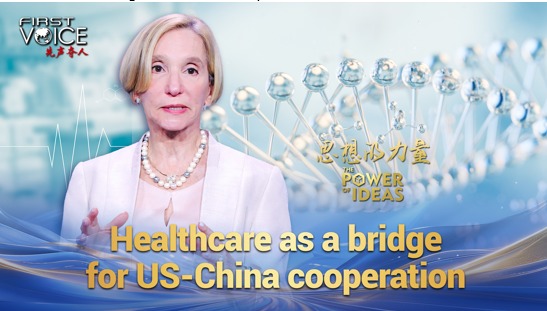

BEIJING, China – November 17, 2026 – [Korewire] – Healthcare cooperation between China and the United States can help build mutual trust, strengthen people-to-people connections and create opportunities for broader regional collaboration, according to Roberta Lipson, founder of United Family Healthcare and Chair Emeritus of the American Chamber of Commerce in China.
Speaking ahead of the 2026 APEC Economic Leaders‘ Meeting in Shenzhen, Lipson highlighted the importance of healthcare as a common ground for cooperation, emphasizing how medical exchanges, joint research, investment and collaboration between healthcare institutions can bring people closer despite differences in bilateral relations.
Having lived and worked in China since 1979, Lipson has witnessed the country’s transformation over nearly five decades. She described healthcare as one of the areas where China’s progress has been particularly significant.
China’s life expectancy has more than doubled since 1949, reaching nearly 80 years in 2025, while infant and maternal mortality rates have fallen by almost tenfold. Lipson attributed these improvements to several factors, including rising living standards, better nutrition, increased prosperity and government initiatives such as Healthy China 2030.
She noted that cooperation between China and the United States has also contributed to progress through medical education, professional exchanges, joint research and partnerships involving hospitals and healthcare service providers.
At United Family Healthcare, doctors from China, the United States and other countries work together to provide medical services to patients from China and more than 120 other countries. According to Lipson, these everyday professional interactions create personal connections and trust that can gradually extend beyond hospitals and contribute to greater understanding between nations.
“Not only does this kind of collaboration bring better treatment to patients in both countries, but it also fosters mutual understanding and trust,” she said.
Lipson also pointed to China’s growing influence in the global healthcare and pharmaceutical industries. As the world’s second-largest healthcare market, China has increasingly become an important source of medical innovation, particularly in oncology, immunology and metabolic diseases.
She highlighted the country’s expanding pharmaceutical research ecosystem, noting that Chinese drug developers signed international licensing agreements worth more than $130 billion in 2025. China-based companies also accounted for 39 percent of global oncology clinical trial starts over the past year, reflecting the country’s growing role in the development of new treatments.
According to Lipson, this progress is creating new opportunities for international partnerships, medical investment and cross-border healthcare services. An increasing number of international patients are looking to China for access to innovative therapies and more affordable treatment options.
She cited CAR-T cell therapy, an advanced treatment for certain blood cancers, as an example of the cost advantages offered by China’s healthcare market. The treatment costs approximately $150,000 to $230,000 in China, compared with more than $550,000 in the United States.
The speed of treatment is another factor attracting international attention. Lipson observed that patients in China may receive complex surgical treatment within days or one to two weeks following diagnosis, while waiting periods in parts of Europe and the United States can extend to several months.
Beyond cancer treatment, she identified anti-aging and healthy longevity services as emerging areas with significant international potential. With its concentration of biomedical research institutions, advanced hospitals and growing capabilities in regenerative medicine, Beijing is well positioned to become a major center for longevity-related healthcare services.
Lipson also stressed that healthcare cooperation should be considered within the broader context of US-China economic and business relations. Drawing on her experience with the American Chamber of Commerce in China and the US-China Business Council, she noted that China remains an important market and investment destination for American companies.
She said more than half of AmCham China members rank the country among their three most important investment destinations, while more than 83 percent consider a stable and constructive US-China relationship important to their business operations in China.
Beyond domestic market opportunities, she explained, China remains an essential part of many multinational companies’ global supply chains, making continued engagement important for long-term growth and competitiveness.
Against a backdrop of geopolitical tensions, economic competition and global health challenges, Lipson argued that healthcare, environmental protection and trade offer practical areas where countries can work together for the benefit of their populations.
She pointed to the 2026 APEC discussions as an important opportunity to advance regional cooperation, noting that collaboration should extend beyond bilateral engagement between China and the United States to include neighboring economies and the wider Asia-Pacific region.
However, she acknowledged that challenges remain, particularly regarding cross-border data flows, artificial intelligence safety and international research collaboration involving genetic data. Addressing these issues through constructive dialogue and regional cooperation will be essential to unlocking the full potential of international healthcare partnerships.
Lipson concluded by emphasizing that cooperation cannot depend solely on government-level agreements. People-to-people exchanges and professional relationships must continue to develop alongside official diplomatic efforts.
In her view, healthcare provides a particularly valuable platform for building those connections, demonstrating that countries with different political and economic systems can still find common ground through shared human needs.
As the Asia-Pacific region looks toward greater cooperation under the APEC framework, her message is that trust built through healthcare collaboration can serve as a foundation for stronger international relationships and a more connected global community.
Video link:- https://www.youtube.com/watch?v=AXZ-TKURDIc
Media:
Contact Person: Apec China
Email: contact@apec2026.cn
Website: Apec China
